Adenosine vs Retinol: Two Wrinkle-Care Ingredients Compared
Adenosine and retinol are both on Korea's list of wrinkle-care ingredients, but they have very different track records and side effects. What each one is, what the studies show, whether to combine them, and why Atomy's range has plenty of adenosine and no retinol.
By AtomyHealth · Independent Guide · · 8 min read · Who we are
In this article
Adenosine and retinol are both used for the look of wrinkles, and both are on the list of ingredients Korea's Ministry of Food and Drug Safety (MFDS) accepts for wrinkle-care functional cosmetics. Retinol has far more research behind it and a well-known downside, irritation. Adenosine is used at very low levels, is gentle, and has a smaller set of studies. In Atomy's range, adenosine is in almost every Absolute product, while retinol itself does not appear on any label we checked.
Note: This article is general cosmetic information, not medical advice. If you are pregnant, breastfeeding or have a skin condition, ask a doctor before using vitamin A products.
What adenosine is
Adenosine is a small molecule found in every living cell. It is one of the building blocks of RNA and the "A" in ATP, the molecule cells use to store energy. In skincare it is used as a wrinkle-care ingredient, mainly in Korean products.
The best-known study is by Abella (2006) in the International Journal of Cosmetic Science. In a blind, randomised, placebo-controlled trial, 126 women aged 45 to 65 applied an adenosine cream, an adenosine film or a placebo around the eyes twice a day for two months. Both adenosine products made the skin around the eyes measurably smoother, starting from week three, measured with an optical method that maps the skin surface. The adenosine cream also improved frown lines between the brows.
A 2018 Korean study by Kang and colleagues compared an adenosine microneedle patch with an adenosine cream around the eyes of 22 women for eight weeks. Both improved wrinkle depth, elasticity and hydration, and no side effects were seen. Both sides used adenosine, so the study tells you nothing about adenosine against no treatment.
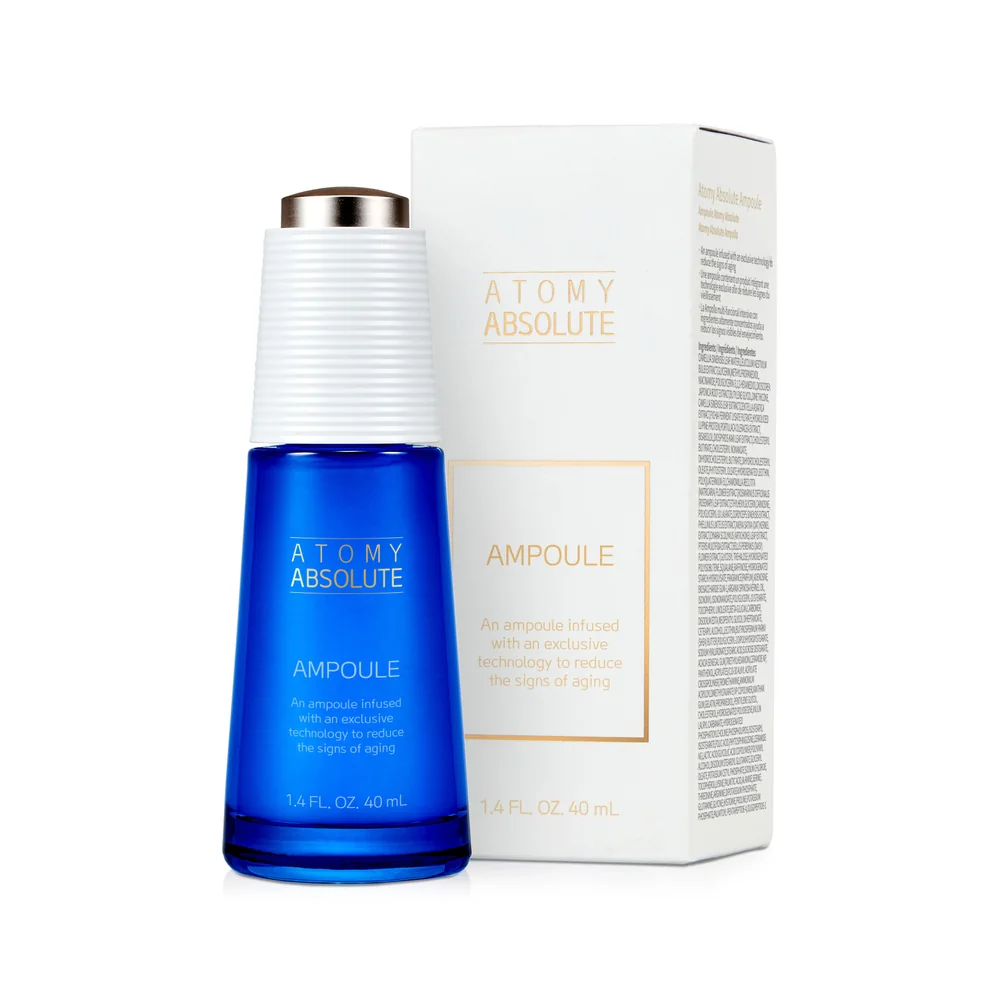
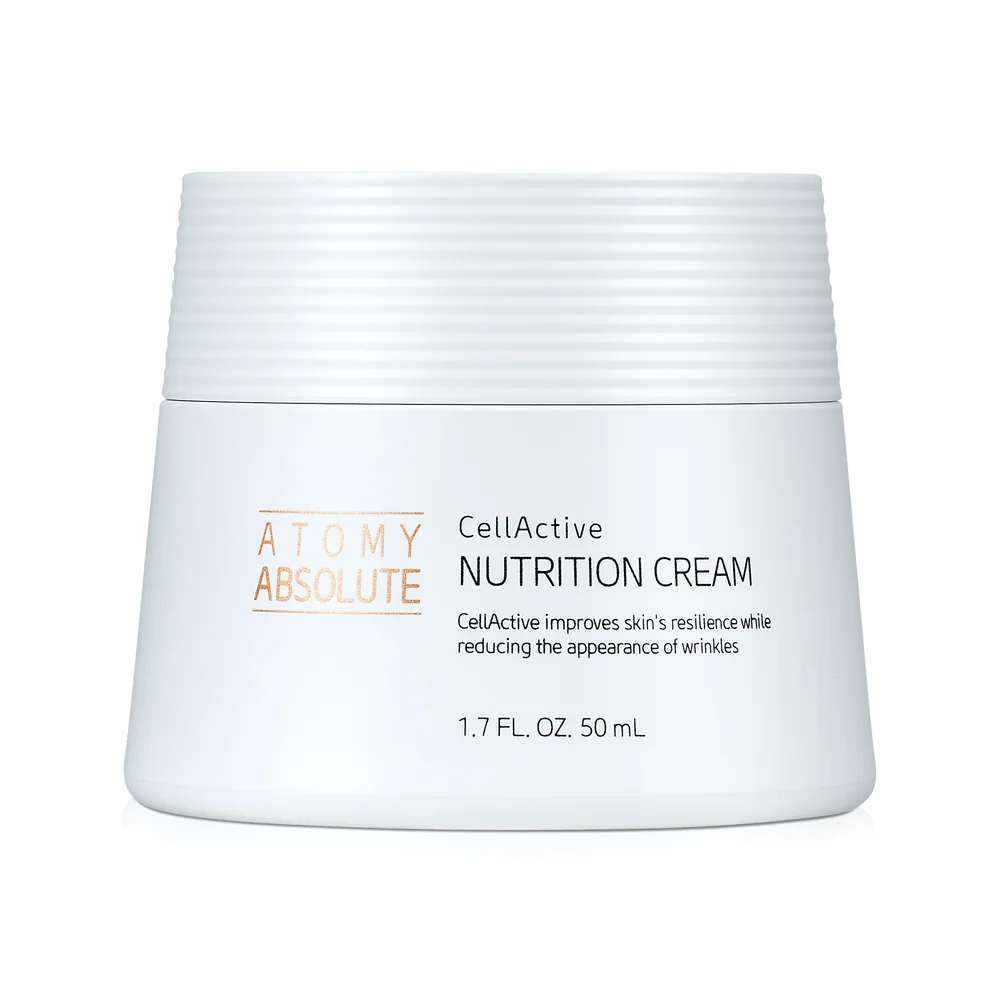
According to ChemLinked's summary of the MFDS rules, the listed level for adenosine in a wrinkle-care functional cosmetic is 0.04%. That is a very small amount, which fits with where adenosine sits on Atomy's EU labels. On the Absolute ampoule and nutrition cream it sits at the start of the part of the list that runs alphabetically, and EU rules let a brand list ingredients present at 1% or less in any order. See our adenosine ingredient page.
What retinol is
Retinol is vitamin A. In the skin it is converted step by step into retinoic acid, the form that acts on skin cells. Sorg and colleagues (2006) describe retinol, retinaldehyde and retinyl esters as cosmetic retinoids because of this controlled conversion.
Retinol has stronger evidence than adenosine. Kafi and colleagues (2007) applied a 0.4% retinol lotion to one arm and a plain lotion to the other arm of 36 elderly people for 24 weeks, and fine wrinkling improved on the retinol side. Biopsies in a small subgroup showed more glycosaminoglycans and procollagen. Kong and colleagues (2016) found that retinol produced the same kind of changes in skin as prescription retinoic acid, only smaller, and that 12 weeks of retinol reduced facial wrinkles in image analysis.
The downside is tolerance. A 2006 review by Mukherjee and colleagues notes that irritation (burning, scaling, dermatitis) limits how well people accept retinoids. It also says retinol and retinaldehyde are much less irritating than tretinoin. Retinoid products are usually used in the evening, with sunscreen during the day, and pregnant women should ask a doctor first.
Retinyl palmitate is a milder ester of vitamin A that needs more conversion steps. Sorg's review says retinol and retinyl esters are not irritating but show only modest clinical effects. More on our retinol ingredient page.
How they differ
| Adenosine | Retinol | |
|---|---|---|
| What it is | A nucleoside found in all cells | Vitamin A |
| On the MFDS wrinkle-care list | Yes, at 0.04% | Yes, at 2,500 IU/g (retinyl palmitate at 10,000 IU/g) |
| Human evidence | A few trials around the eyes | Several controlled trials, plus biopsy data |
| Irritation | No side effects seen in the Kang study | Burning and scaling can limit use |
| Time of day | Morning and evening | Usually evening, with sunscreen by day |
| Pregnancy | No specific warning found | Ask a doctor first |
The MFDS figures come from ChemLinked's summary of the Korean rules.
Can you use adenosine and retinol together?
There is no known reason not to. We did not find a study that tests the two together, or one that compares them directly, so any claim that the pair works better than either alone is unproven.
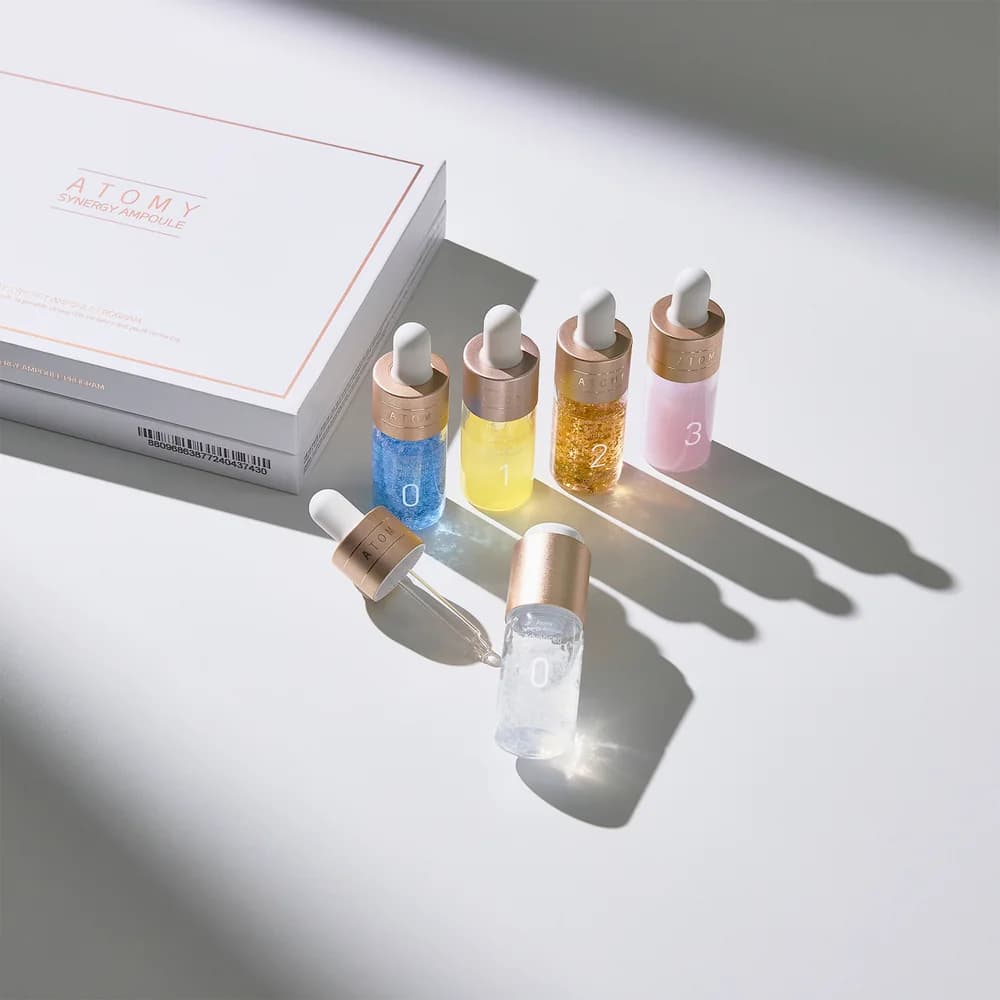
Atomy already combines adenosine with a vitamin A ester. The Vita Luminous ampoule in the Synergy Ampoule Program lists Adenosine and Retinyl Palmitate in the same part of the formula. If you add a separate retinol serum to an adenosine routine, introduce the retinol slowly, a few evenings a week at first, and watch for dryness. If your skin is sensitive or you are pregnant, an adenosine product is the easier choice, but there is less evidence for it.
Where they appear in Atomy's range
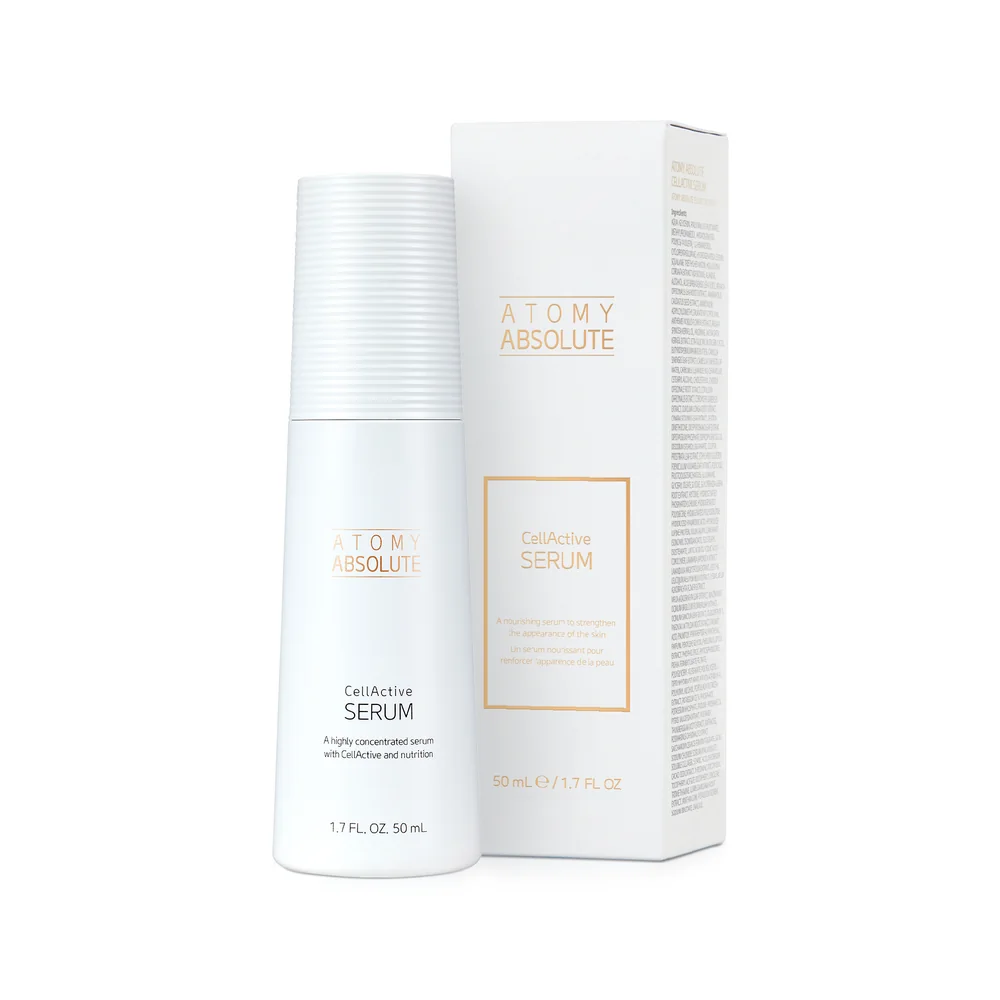
From Atomy's official labels (November 2026), adenosine is in 18 Atomy products, sets included. In the Absolute line it is in the CellActive Ampoule, the CellActive Serum, where Atomy names adenosine and tocopheryl acetate as the active ingredients, the Nutrition Cream, the Eye-Complex, the Spot-Out Cream and the 24K Gold Night Mask. It is also in THE FAME Eye Cream, the Marine Ampoule Eye Patch, all four Synergy ampoules, and even in makeup such as the Absolute BB.
Many of these products also list niacinamide. In Korea, the Absolute ampoule is registered for both brightening and wrinkle care, and Atomy's EU page says it "helps improve skin wrinkles".
Retinol itself does not appear on any Atomy label we checked. The only vitamin A ingredient is retinyl palmitate, in the Synergy Vita Luminous ampoule. If you want a classic retinol serum, you will not find one in Atomy's range at the moment.
When the malls were checked on 5 November 2026, the Absolute ampoule, serum and nutrition cream were listed in the EU, the UK, the US, Korea and most other checked countries, and the Synergy Ampoule Program in the EU, the UK, the US, Korea, Japan and others.
Frequently asked questions
Is adenosine as effective as retinol? No study has compared them directly. Retinol has more and stronger evidence, including biopsy data. Adenosine has a few positive trials around the eyes and is much gentler, so the trade-off is evidence against comfort.
Can I use adenosine and retinol together? Yes, as far as we know. Nothing suggests they interfere with each other. Atomy's Synergy Vita Luminous ampoule pairs adenosine with retinyl palmitate.
Does Atomy sell a retinol product? Not that we could find. The only vitamin A form on Atomy labels is retinyl palmitate in the Synergy Vita Luminous ampoule.
Can I use adenosine around the eyes? Atomy uses it in its eye products, including the Absolute Eye-Complex, THE FAME Eye Cream and the Marine Ampoule Eye Patch, and the main studies on adenosine tested it around the eyes. Follow the directions for each product and keep it out of the eyes themselves.
Medical note: Cosmetics do not diagnose, treat or prevent any disease. If you are pregnant or breastfeeding, or have a skin condition, speak to a doctor before using retinoid products.
AtomyHealth is run by an independent, registered Atomy distributor. This site does not sell anything; Atomy products are bought on Atomy's official malls. General information, not medical advice.
Sources
- Atomy official product labels and mall listings for the Absolute line, THE FAME Eye Cream, Marine Ampoule Eye Patch and Synergy Ampoule Program, checked November 2026.
- Abella ML. Evaluation of anti-wrinkle efficacy of adenosine-containing products using the FOITS technique. International Journal of Cosmetic Science. 2006;28(6):447-451. https://doi.org/10.1111/j.1467-2494.2006.00349.x
- Kang G, Tu TNT, Kim S, et al. Adenosine-loaded dissolving microneedle patches to improve skin wrinkles, dermal density, elasticity and hydration. International Journal of Cosmetic Science. 2018;40(2):199-206. https://doi.org/10.1111/ics.12453
- Kafi R, Kwak HS, Schumacher WE, et al. Improvement of naturally aged skin with vitamin A (retinol). Archives of Dermatology. 2007;143(5):606-612. https://doi.org/10.1001/archderm.143.5.606
- Kong R, Cui Y, Fisher GJ, et al. A comparative study of the effects of retinol and retinoic acid on histological, molecular, and clinical properties of human skin. Journal of Cosmetic Dermatology. 2016;15(1):49-57. https://doi.org/10.1111/jocd.12193
- Mukherjee S, Date A, Patravale V, et al. Retinoids in the treatment of skin aging: an overview of clinical efficacy and safety. Clinical Interventions in Aging. 2006;1(4):327-348. https://doi.org/10.2147/ciia.2006.1.4.327
- Sorg O, Antille C, Kaya G, Saurat JH. Retinoids in cosmeceuticals. Dermatologic Therapy. 2006;19(5):289-296. https://doi.org/10.1111/j.1529-8019.2006.00086.x
- ChemLinked. Detailing Korean functional cosmetic registration (list of MFDS-approved anti-wrinkle and whitening ingredients). https://cosmetic.chemlinked.com/expert-article/detailing-korean-functional-cosmetic-registration
- Korea Testing and Research Institute (KTR). Functional cosmetics main-ingredient testing under the MFDS standards. https://ktr.or.kr/test-evaluation/cosmetic/contentsid/308/index.do
- Regulation (EC) No 1223/2009 on cosmetic products, Article 19 (labelling; ingredients under 1% may be listed in any order). https://eur-lex.europa.eu/eli/reg/2009/1223/oj