Hyaluronic Acid vs Ceramides: Which Does Dry Skin Need?
Hyaluronic acid holds water, and ceramides help keep it from escaping. What each one is, what the studies show, why most good moisturisers use both, and which forms appear on Atomy labels.
By AtomyHealth · Independent Guide · · 8 min read · Who we are
In this article
Hyaluronic acid is a humectant: it attracts and holds water. Ceramides are lipids that sit between the cells of the skin's outer layer and slow down the water that escapes from it. They do different jobs, so a dry skin routine usually needs both, and most Atomy creams list both on the same label.
Note: This article is general cosmetic information, not medical advice. If your skin is very dry, cracked, itchy or inflamed, ask a doctor or pharmacist.
What hyaluronic acid is
Hyaluronic acid is a long sugar-based molecule that the body makes itself. Papakonstantinou and colleagues (2012) call it "the key molecule involved in skin moisture", because it binds large amounts of water in the skin.
In skincare it comes in several forms, and you will see them under different names on a label. Sodium hyaluronate is its salt. Hydrolyzed hyaluronic acid and hydrolyzed sodium hyaluronate are broken into smaller pieces. Sodium hyaluronate crosspolymer is linked into a network. The size of the molecule changes what it does on the skin.
Pavicic and colleagues (2011) tested this in 76 women aged 30 to 60. Each woman used a cream with 0.1% hyaluronic acid of one molecular size (from 50 to 2,000 kDa) around one eye and a plain cream around the other, twice a day for 60 days. All the hyaluronic acid creams improved hydration and elasticity compared with the plain cream. Only the two smallest sizes, 50 and 130 kDa, also reduced measured wrinkle depth. More on our hyaluronic acid ingredient page.
What ceramides are
Ceramides are fatty molecules (sphingolipids) built from a long-chain base such as sphingosine or phytosphingosine joined to a fatty acid. A 2003 review by Coderch and colleagues in the American Journal of Clinical Dermatology describes them as the main lipid in the layered sheets between the cells of the stratum corneum, the skin's outermost layer. Those sheets are roughly equal parts ceramides, cholesterol and free fatty acids, and they form much of the barrier that keeps water in.
On labels you will see names like Ceramide NP (once called ceramide 3), Ceramide NG, Ceramide NS, Ceramide AP, Ceramide AS and Ceramide EOP. The letters describe which fatty acid and which base each one is made from.
Does putting ceramides on the skin help? The classic work is by Man, Feingold, Elias and colleagues (1996), done mainly on mouse skin whose barrier had been damaged in the lab, with preliminary results in human skin. Applying only one or two of the three lipids delayed barrier recovery. Mixtures of ceramides, cholesterol and fatty acids in equal proportions let it recover normally, and some adjusted ratios sped it up. Coderch's review draws the same lesson: incomplete lipid mixtures do worse than complete ones. See our ceramides ingredient page.
How they differ
| Hyaluronic acid | Ceramides | |
|---|---|---|
| Type of ingredient | Humectant (binds water) | Lipid (part of the barrier) |
| Where it works | Holds water on and in the upper skin | Fills the spaces between surface cells |
| Texture | Watery, light | Usually in creams and lotions |
| Best partner | A cream on top so the water stays in | Cholesterol and fatty acids |
| Names on the label | Hyaluronic Acid, Sodium Hyaluronate, Hydrolyzed Hyaluronic Acid | Ceramide NP, NG, NS, AP, AS, EOP |
Can you use hyaluronic acid and ceramides together?
Yes, and they work best that way. Hyaluronic acid adds water and ceramides help the skin hold it, so the two cover different halves of the problem. The usual order is thin to thick: a toner, essence or serum with hyaluronic acid first, then a cream with ceramides. On very dry skin, a hyaluronic acid serum alone without a cream on top is usually not enough.
The studies above did not test the two side by side or as a pair, so we cannot say how much each one adds in a finished cream. What the barrier research does suggest is that a ceramide cream that also contains cholesterol and fatty acids is closer to the skin's own mix than ceramide alone.
Where they appear in Atomy's range
From Atomy's official labels (November 2026), hyaluronic acid in some form is in 34 Atomy products and ceramides are in 36, sets included. A few labels stand out.
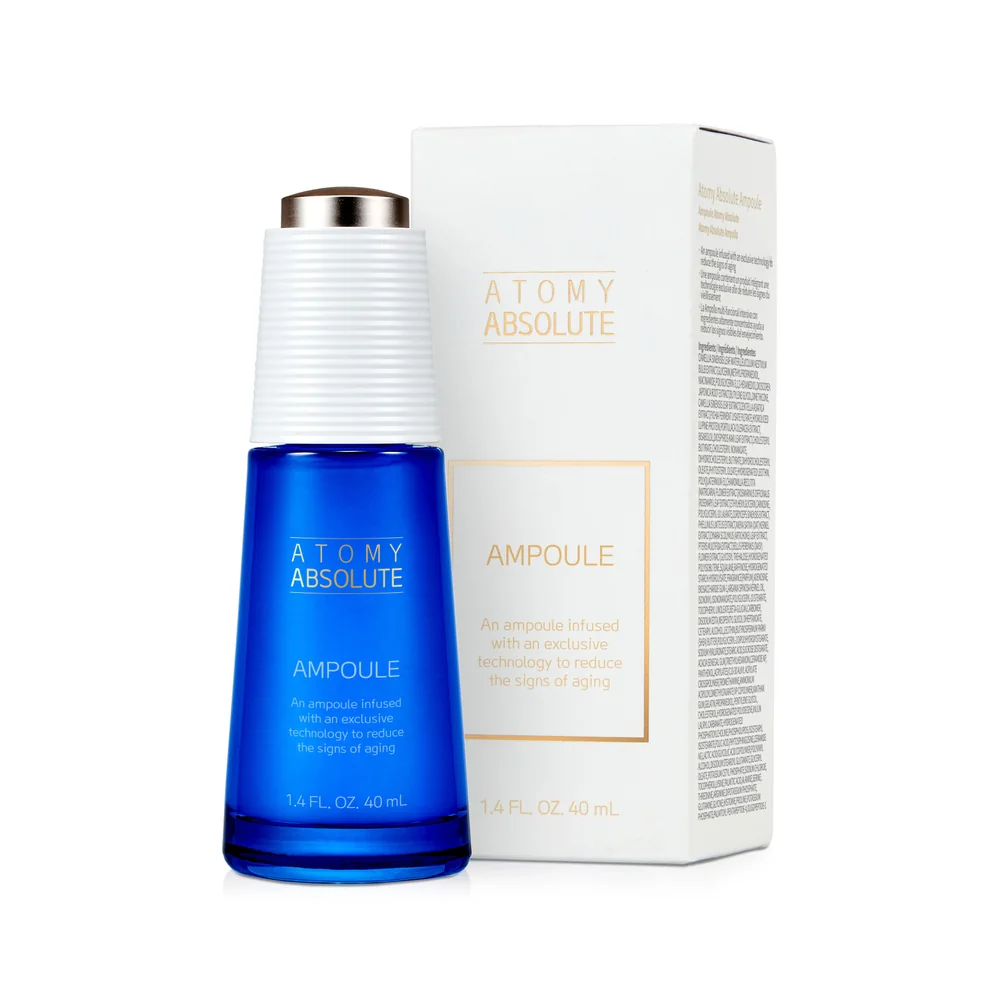
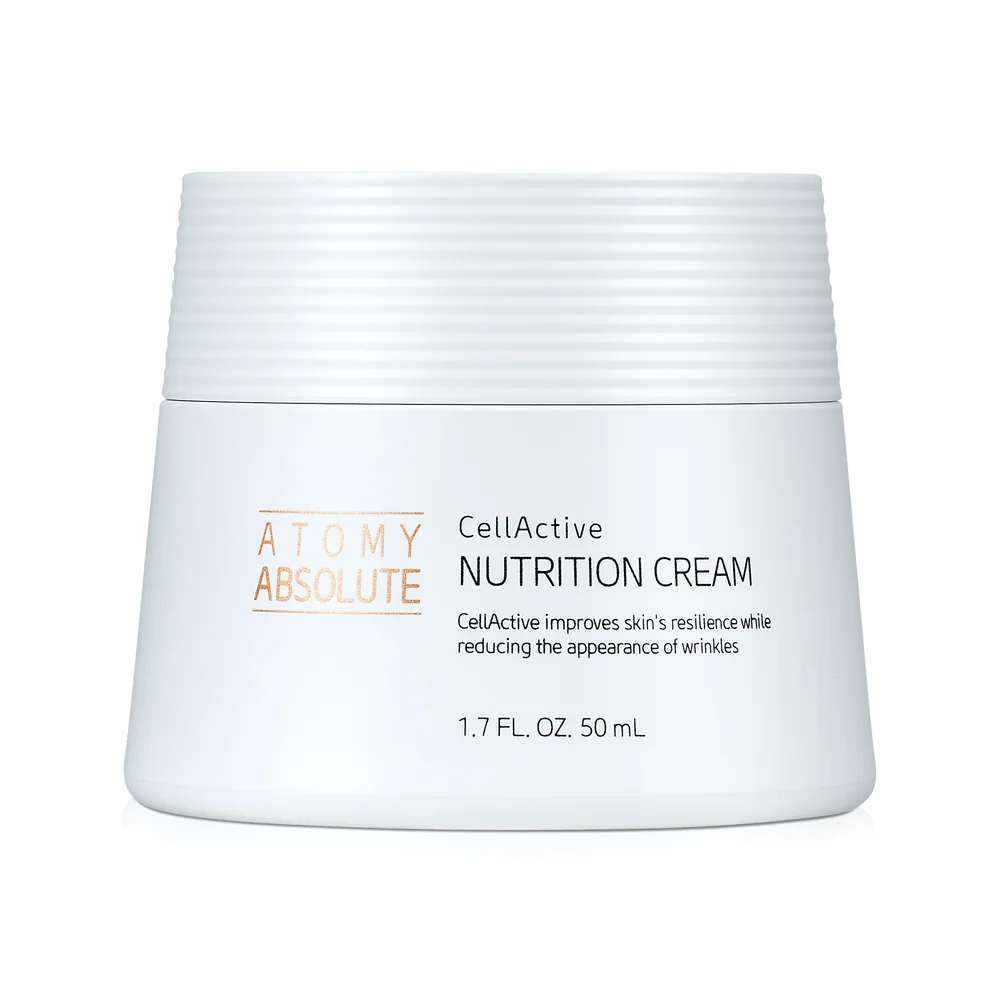
The Absolute CellActive Ampoule and Absolute CellActive Nutrition Cream list Ceramide NG, Ceramide NP, Cholesterol and Phytosphingosine, along with palmitic and stearic acid (and myristic acid in the cream). That covers all three lipid types from the barrier studies. On the EU labels all of these sit in the alphabetical part of the list, where ingredients at 1% or less can go, so we cannot tell their ratio. The ampoule uses Sodium Hyaluronate and the cream Hydrolyzed Hyaluronic Acid.
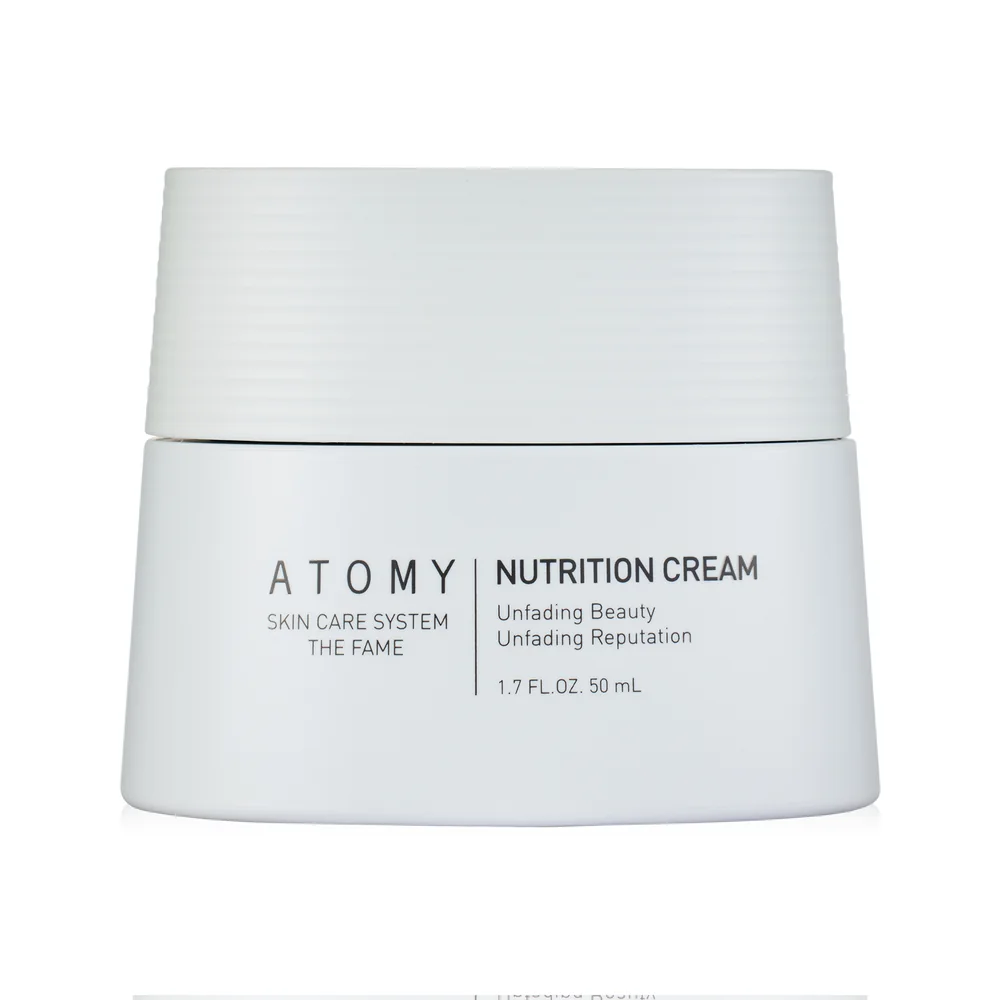
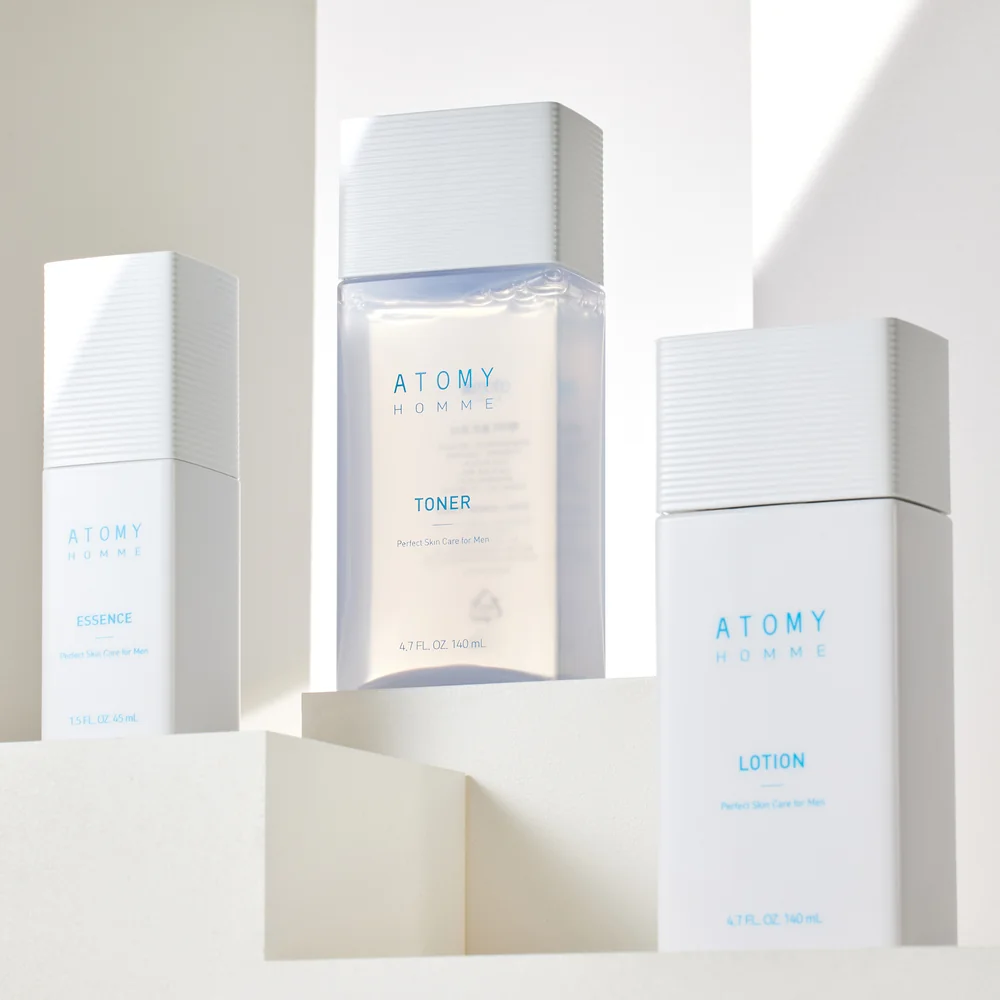
THE FAME Nutrition Cream is the one to look at for hyaluronic acid. Atomy highlights five types, and the UK label lists Hyaluronic Acid, Hydrolyzed Hyaluronic Acid, Hydrolyzed Sodium Hyaluronate, Sodium Hyaluronate and Sodium Hyaluronate Crosspolymer. It also has Ceramide NP with palmitic, myristic and stearic acid, but no cholesterol on the label. The Homme Skincare Set uses the same five forms of hyaluronic acid.
The Hydra Brightening Cream combines Sodium Hyaluronate and Hydrolyzed Hyaluronic Acid with Ceramide NP and fatty acids, and Atomy says it has a lamellar structure similar to the skin's own lipid layer. The Derma Real Cica Cream pairs Ceramide NP and Phytosphingosine with Hydrolyzed Hyaluronic Acid.
The widest range of ceramides is in a makeup product: the Adelica The New Gold Collagen Ampoule Cushion lists Ceramide NP, NS, AP, AS and EOP with cholesterol and phytosphingosine. When Atomy's malls were checked on 5 November 2026, it was listed in only a few countries, including Korea, Australia and Taiwan. The Absolute creams are much easier to find and were listed in the EU, the UK, the US and most other checked countries.
Frequently asked questions
Which is better for dry skin, hyaluronic acid or ceramides? Neither alone. Hyaluronic acid adds water, and ceramides help keep it in. For skin that feels tight and flaky, a cream with ceramides, cholesterol and fatty acids is the more important step, and a hyaluronic acid serum underneath is a good addition.
Do I need a separate hyaluronic acid serum if my cream already has it? Not necessarily. Many Atomy creams already contain both, such as THE FAME Nutrition Cream and the Absolute Nutrition Cream. A separate serum mainly adds more water-binding ingredients and a lighter layer underneath.
What is the difference between hyaluronic acid and sodium hyaluronate? Sodium hyaluronate is the salt form of hyaluronic acid, and it does the same job in skincare. Hydrolyzed forms are broken into smaller pieces. In the Pavicic study, only the smaller sizes also reduced wrinkle depth, but labels do not say how small a hydrolyzed ingredient is.
What does Ceramide NP mean? It is the most common ceramide on Atomy labels. The letters name its building blocks, a type of fatty acid and the base phytosphingosine. Older labels called it ceramide 3.
Medical note: Cosmetics do not diagnose, treat or prevent any disease. Very dry, cracked or itchy skin that does not improve with a moisturiser should be seen by a doctor.
AtomyHealth is run by an independent, registered Atomy distributor. This site does not sell anything; Atomy products are bought on Atomy's official malls. General information, not medical advice.
Sources
- Atomy official product labels and mall listings for the Absolute line, THE FAME Nutrition Cream, Homme Skincare Set, Hydra Brightening Cream, Derma Real Cica Cream and Adelica The New Gold Collagen Ampoule Cushion, checked November 2026.
- Papakonstantinou E, Roth M, Karakiulakis G. Hyaluronic acid: a key molecule in skin aging. Dermato-Endocrinology. 2012;4(3):253-258. https://doi.org/10.4161/derm.21923
- Pavicic T, Gauglitz GG, Lersch P, et al. Efficacy of cream-based novel formulations of hyaluronic acid of different molecular weights in anti-wrinkle treatment. Journal of Drugs in Dermatology. 2011;10(9):990-1000. https://pubmed.ncbi.nlm.nih.gov/22052267/
- Coderch L, López O, de la Maza A, Parra JL. Ceramides and skin function. American Journal of Clinical Dermatology. 2003;4(2):107-129. https://doi.org/10.2165/00128071-200304020-00004
- Man MQ, Feingold KR, Thornfeldt CR, Elias PM. Optimization of physiological lipid mixtures for barrier repair. Journal of Investigative Dermatology. 1996;106(5):1096-1101. https://doi.org/10.1111/1523-1747.ep12340135
- Regulation (EC) No 1223/2009 on cosmetic products, Article 19 (labelling; ingredients under 1% may be listed in any order). https://eur-lex.europa.eu/eli/reg/2009/1223/oj