Niacinamide vs Vitamin C: Differences and Using Them Together
Niacinamide and vitamin C are both used for dull, uneven-looking skin, but they behave very differently in a bottle. What each one is, what the studies show, whether you can use them together, and which Atomy labels list which form.
By AtomyHealth · Independent Guide · · 8 min read · Who we are
In this article
Niacinamide (vitamin B3) and vitamin C are both used for dull, uneven-looking skin, but they are very different to formulate. Niacinamide is stable and easy to put in almost any product, while pure vitamin C (ascorbic acid) breaks down quickly and needs an acidic formula to get into the skin. You can use them together, and Atomy puts both in the same bottle in several of its own products.
Note: This article is general cosmetic information, not medical advice. If you have a skin condition or a pigmentation problem that worries you, ask a doctor.
What niacinamide is
Niacinamide, also called nicotinamide, is the water-soluble amide form of vitamin B3. In skincare it is mostly used for the look of uneven tone and dark spots.
The best-known studies come from researchers at Procter & Gamble, which is worth knowing when you read them. Hakozaki and colleagues (2002) found in lab models that niacinamide did not block tyrosinase, the enzyme that makes melanin. It did reduce the transfer of pigment packets (melanosomes) from pigment cells to the surrounding skin cells. In the clinical part of the same paper, Japanese women who used a 5% niacinamide moisturiser had less visible hyperpigmentation and lighter-looking skin after four weeks than with the plain moisturiser.
Bissett and colleagues (2004) ran a 12-week split-face study in 50 women aged 40 to 60: a moisturiser with 5% niacinamide on one side, the same moisturiser without it on the other. The niacinamide side scored better for fine lines, spots, texture, red blotchiness and sallowness, and the authors reported it was well tolerated. More on our niacinamide ingredient page.
What vitamin C is
In skincare, "vitamin C" covers pure L-ascorbic acid and a group of more stable derivatives. Ascorbic acid is an antioxidant, and Telang's 2013 review in the Indian Dermatology Online Journal notes it is used for photoageing and uneven pigmentation, but that it is unstable and hard to deliver into the skin.
Pinnell and colleagues (2001) tested this on pig skin. Ascorbic acid only got into the skin when the formula had a pH below 3.5. Two derivatives they tested, magnesium ascorbyl phosphate and ascorbyl palmitate, did not raise the level of ascorbic acid in the skin. A 2026 systematic review by Boghosian and colleagues in the Journal of Clinical and Aesthetic Dermatology still rates ascorbic acid as the most clinically validated form. It reports that sodium ascorbyl phosphate improved texture and pigmentation, mainly when paired with microneedling, and concludes that results depend on the derivative, the base formula, the pH and how it is stabilised. See our vitamin C ingredient page.
How they differ
| Niacinamide | Vitamin C | |
|---|---|---|
| What it is | Vitamin B3 (amide form) | Ascorbic acid or a derivative |
| Stability | Stable in water-based formulas | Ascorbic acid breaks down easily; derivatives are more stable |
| pH needs | Works in ordinary formulas | Ascorbic acid needs pH below 3.5 to enter skin (pig skin study) |
| How it works on tone | Reduces pigment transfer (lab models) | Antioxidant; also studied for pigmentation |
| On Korea's brightening list | Yes | Some derivatives (see below) |
Korea's Ministry of Food and Drug Safety (MFDS) keeps a list of ingredients that a product can use to register as a brightening functional cosmetic. According to ChemLinked's summary of those rules, niacinamide is on it, along with four vitamin C derivatives: ascorbyl glucoside, magnesium ascorbyl phosphate, ethyl ascorbyl ether and ascorbyl tetraisopalmitate. The vitamin C forms we found on Atomy's labels (sodium ascorbyl phosphate, ascorbic acid and ascorbyl palmitate) are not among the four named in that summary.
Can you use niacinamide and vitamin C together?
Yes. The worry you see online is that the two react in water and cancel each other out. We did not find a peer-reviewed study showing that this happens to any meaningful degree in finished skincare, and none of the reviews we read for this article warns against the pairing.
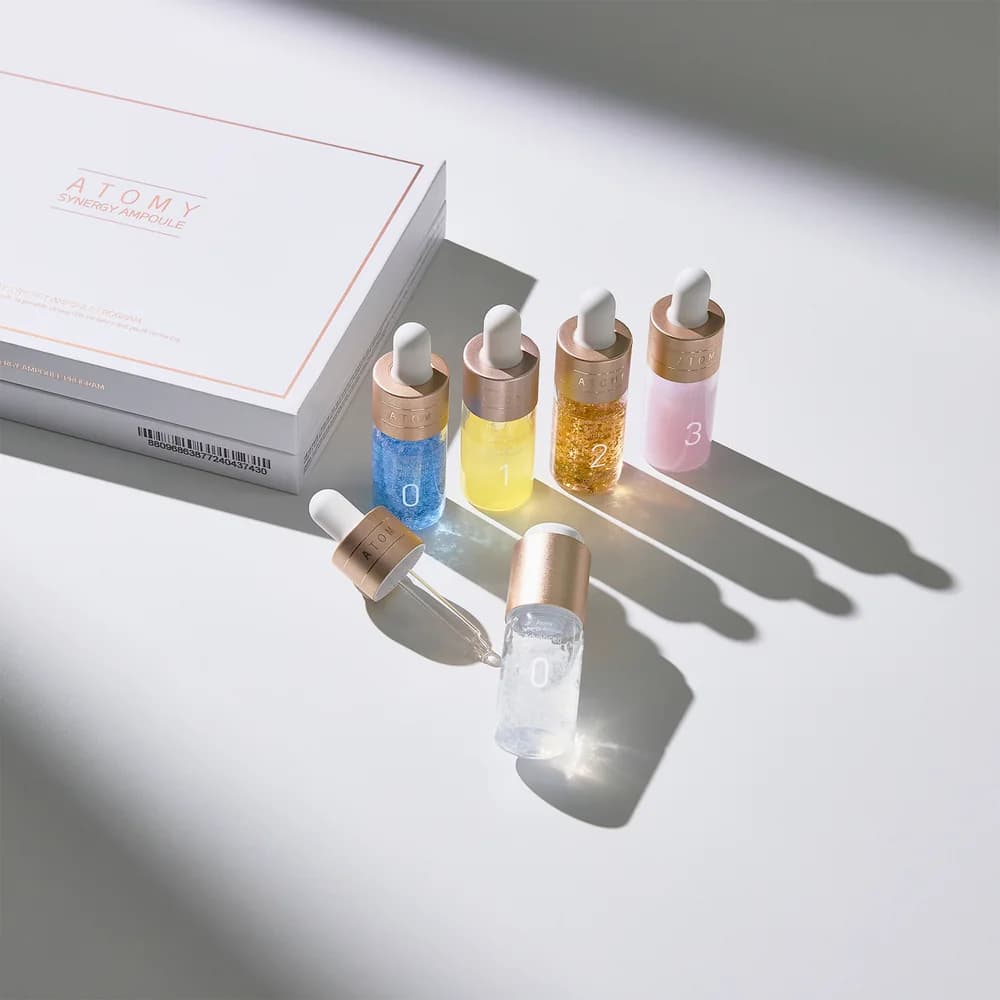
Atomy's labels are a useful real-world check. The Vita Luminous ampoule in the Synergy Ampoule Program has niacinamide fifth on its list and sodium ascorbyl phosphate further down. Its second part is a separate powder of ascorbic acid, mannitol, maltodextrin and ubiquinone, which you stir into the liquid before first use. Atomy keeps the ascorbic acid apart so it stays fresh, and says to use each mixed ampoule within two weeks. That is a sign of how fragile ascorbic acid is, and it has nothing to do with niacinamide.
If you use two separate products, a simple routine works. Many people put a vitamin C serum on in the morning under sunscreen, because its main role is as an antioxidant, and use niacinamide morning or night. If a product stings, use it on different days or at a different time from your other actives.
Where they appear in Atomy's range
From Atomy's official labels (November 2026), niacinamide is in 26 Atomy products, sets included. It is near the top of the list in these:
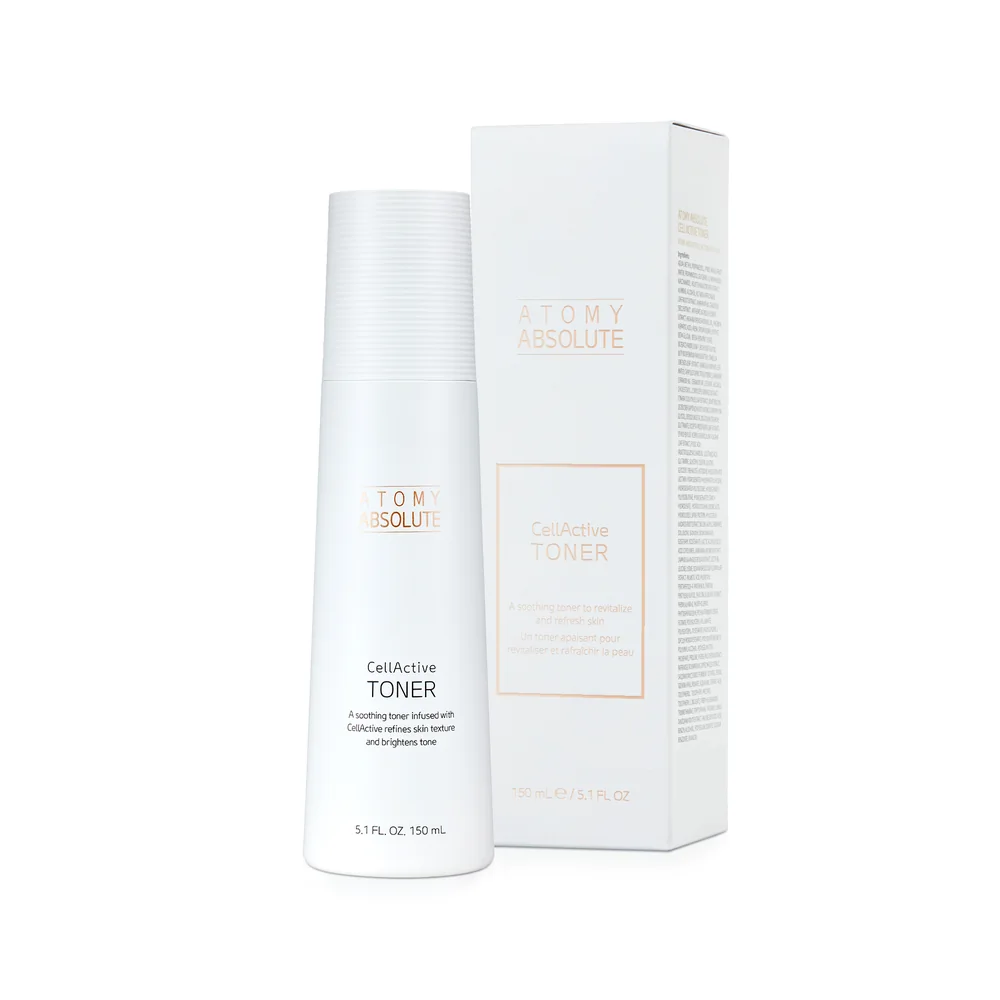
- Absolute CellActive Toner, where Atomy names it the main brightening ingredient;
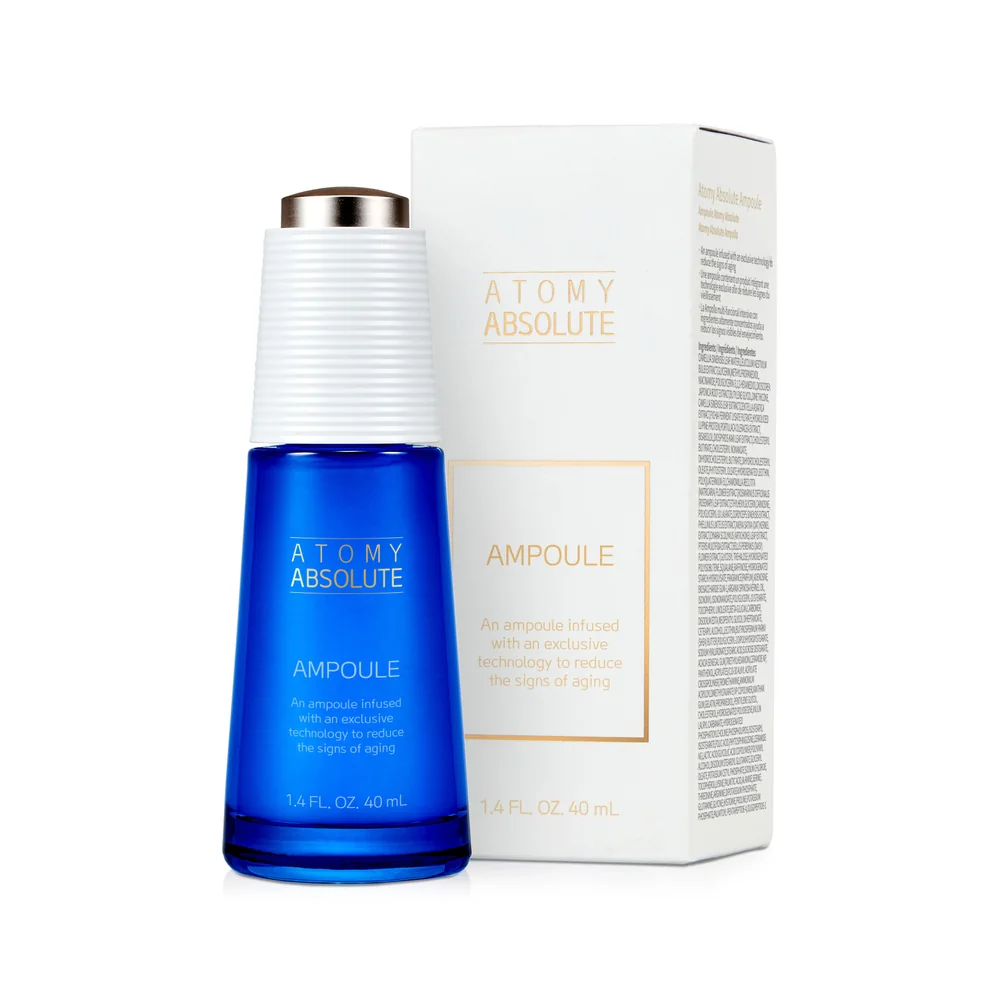
- Absolute CellActive Ampoule, fifth on the EU label;
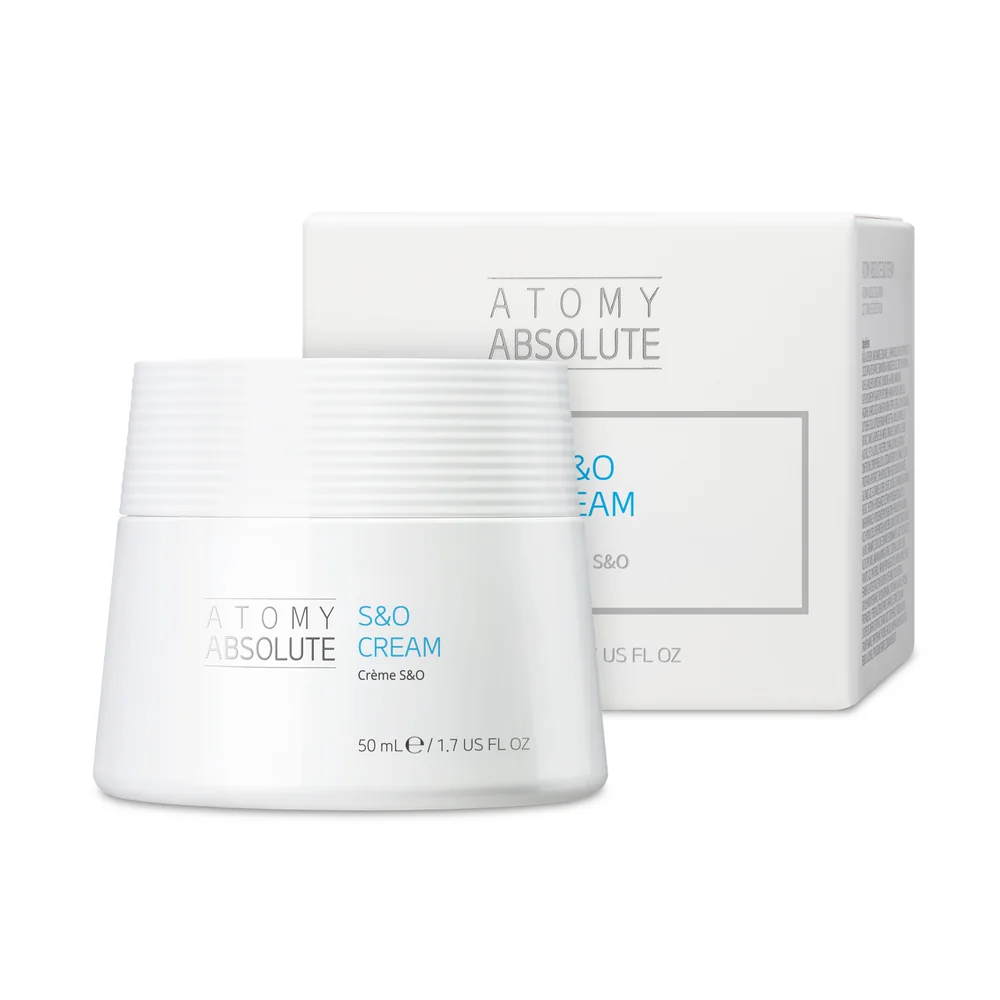
- Absolute Spot-Out Cream, third;
- Hydra Brightening Capsule Essence, fourth, and Hydra Brightening Cream, sixth;
- THE FAME Nutrition Cream, tenth, a cream registered in Korea as a brightening functional cosmetic.
Vitamin C in skincare form is rarer. The Synergy Vita Luminous ampoule is the only Atomy product where it plays a main role. The Hydra Brightening Essence and Cream list ascorbic acid, but near the very end, after citric acid, so the amount is probably small and niacinamide does most of the work there. The Absolute BB lists ascorbyl palmitate, one of the derivatives that did not raise skin ascorbic acid levels in Pinnell's pig-skin study. Atomy Vitamin C is a food supplement in 500 mg sticks and has nothing to do with skincare.
On availability: when the malls were checked on 5 November 2026, the Hydra Brightening products were listed in Korea, the US, Australia, Singapore and many other countries, but not on the EU or UK malls. The Synergy Ampoule Program and the Absolute toner and ampoule are listed in the EU and the UK.
Frequently asked questions
Can you use niacinamide and vitamin C together? Yes. We found no evidence that they cancel each other out in normal skincare. Atomy's Synergy Vita Luminous ampoule contains niacinamide, sodium ascorbyl phosphate and ascorbic acid in the same mixed bottle.
Which is better for dull skin, niacinamide or vitamin C? They have not been compared head to head in a good study. Niacinamide is easier to tolerate and keeps well. Pure ascorbic acid has the most clinical data among vitamin C forms, but it only works in an acidic, well-stabilised formula.
Is Hydra Brightening a vitamin C line? Not really. Niacinamide is fourth on the Capsule Essence label and sixth on the Cream, while ascorbic acid is close to the end of both lists.
Does taking Atomy Vitamin C help my skin the way a serum does? They are different products. The EU allows the claim that vitamin C contributes to normal collagen formation for the normal function of the skin. That is a general nutrition claim, and it says nothing about brightening.
Medical note: Cosmetics do not diagnose, treat or prevent any disease. Dark patches that change, spread or appear suddenly should be checked by a doctor.
AtomyHealth is run by an independent, registered Atomy distributor. This site does not sell anything; Atomy products are bought on Atomy's official malls. General information, not medical advice.
Sources
- Atomy official product labels and mall listings for the Synergy Ampoule Program, Hydra Brightening line, Absolute line, THE FAME Nutrition Cream and Atomy Vitamin C, checked November 2026.
- Hakozaki T, Minwalla L, Zhuang J, et al. The effect of niacinamide on reducing cutaneous pigmentation and suppression of melanosome transfer. British Journal of Dermatology. 2002;147(1):20-31. https://doi.org/10.1046/j.1365-2133.2002.04834.x
- Bissett DL, Miyamoto K, Sun P, Li J, Berge CA. Topical niacinamide reduces yellowing, wrinkling, red blotchiness, and hyperpigmented spots in aging facial skin. International Journal of Cosmetic Science. 2004;26(5):231-238. https://doi.org/10.1111/j.1467-2494.2004.00228.x
- Telang PS. Vitamin C in dermatology. Indian Dermatology Online Journal. 2013;4(2):143-146. https://doi.org/10.4103/2229-5178.110593
- Pinnell SR, Yang H, Omar M, et al. Topical L-ascorbic acid: percutaneous absorption studies. Dermatologic Surgery. 2001;27(2):137-142. https://doi.org/10.1046/j.1524-4725.2001.00264.x
- Boghosian T, Mendez H, Boghosian N, et al. Clinical applications of vitamin C in dermatology: a systematic review. Journal of Clinical and Aesthetic Dermatology. 2026;19(7):10-15. https://pubmed.ncbi.nlm.nih.gov/42761976/
- ChemLinked. Detailing Korean functional cosmetic registration (list of MFDS-approved whitening and anti-wrinkle ingredients). https://cosmetic.chemlinked.com/expert-article/detailing-korean-functional-cosmetic-registration
- Korea Testing and Research Institute (KTR). Functional cosmetics main-ingredient testing under the MFDS standards. https://ktr.or.kr/test-evaluation/cosmetic/contentsid/308/index.do