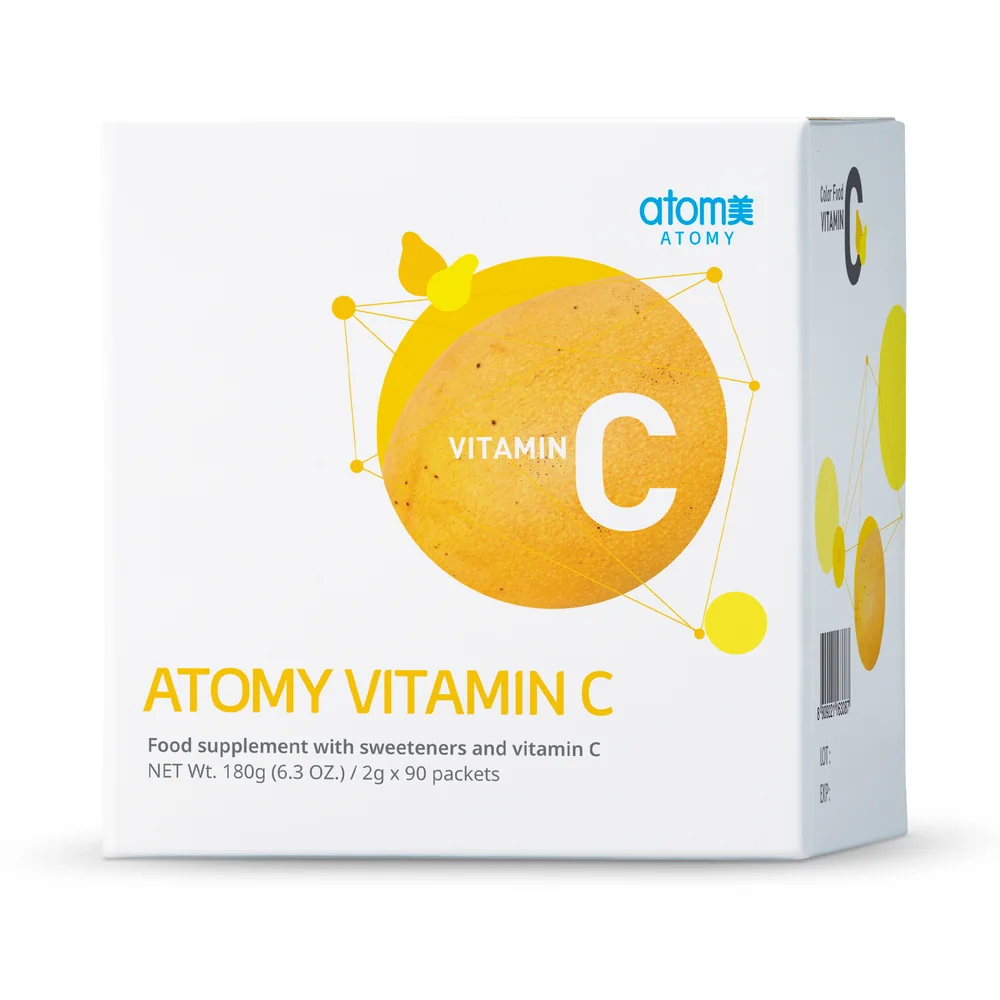
Atomy Vitamin C Review: 110 mg, 500 mg or 1,000 mg Depending on Your Country
Atomy Vitamin C is one of Atomy's best-selling supplements, but the box is not the same everywhere. A stick has 110 mg of vitamin C in the Philippines, 500 mg in the US and Europe, and Malaysia sells a 550 mg and a 1,000 mg version. Labels, prices and what to look for.
By AtomyHealth · Independent Guide · · 6 min read · Who we are
In this article
Short answer: Atomy Vitamin C is a mango-flavoured powder in 2 g sticks, 90 to a box, taken one stick a day. How much vitamin C a stick contains depends on where you buy it: 110 mg in the Philippines, 500 mg in the US and the EU, and 550 mg or 1,000 mg in Malaysia, which sells two versions. Read the label of your own country's box before comparing it with anything else.
The versions side by side
We read the product pages of each official mall on 21 November 2026. Prices are member prices on that day.
| Country | Product name on the mall | Vitamin C per stick | Box | Price |
|---|---|---|---|---|
| Philippines | Atomy Vital Color Vitamin C | 110 mg | 90 × 2 g | ₱1,300 (non-members ₱1,560) |
| US | Vital Color Vitamin C | 500 mg | 90 packets | $24 (promotional price) |
| EU | Vitamin C | 500 mg | 90 × 2 g | see the EU mall |
| UK | Vitamin C | see the label | 90 sticks | £19.50 |
| Malaysia | Atomy Vitamin C 550mg Powder | 550 mg | 90 × 2 g | RM80 |
| Malaysia | Atomy Vitamin C 1000mg Powder | 1,000 mg | 90 packets | RM92 |
| Canada | Vitamin C | see the label | 90 × 2 g | CA$27 (non-members CA$31) |
| Australia | Vitamin C | see the label | 90 sachets | AU$32 |
Both Malaysian versions carry a Halal logo and are sold as health supplements.
What is in a stick
The flavour is the same idea everywhere: mango, with other fruit and vegetable powders, sweetened without sugar. The details differ by label.
US (500 mg). Vitamin C from ascorbic acid and sodium ascorbate, 556% of the Daily Value, 10 calories per packet. Other ingredients: xylitol, maltodextrin, lactose, mango concentrate, dextrin, freeze-dried strawberries, silicon dioxide, steviol glycosides, pomegranate extract powder, pumpkin extract, tangerine concentrate, chicory root extract, turmeric extract and mesima powder. The label says it contains milk.
Philippines (110 mg). Vitamin C (L-ascorbic acid), xylitol, lactose powder, mango concentrate powder, maltodextrin, indigestible maltodextrin, DL-malic acid, silicon dioxide, citric acid, strawberry, cranberry and pomegranate concentrate powders, pumpkin, mandarin and chicory extract powders, and sucralose. The 110 mg is 146% of the Philippine reference intake for adults that the label uses.
EU (500 mg). L-ascorbic acid and sodium ascorbate, 556% of the nutrient reference value, with mango, cranberry, pomegranate, pumpkin, mandarin, chicory and turmeric powders, lactose, fish collagen and coenzyme Q10, sweetened with xylitol and sucralose. Our Vitamin C product page has the full EU list.
We could not read the ingredient lists of the Malaysian, UK, Canadian and Australian versions on their product pages, so we don't repeat them here.
How much vitamin C do you need?
For comparison, the US National Institutes of Health gives a recommended daily amount of 90 mg for adult men and 75 mg for adult women, and an upper limit of 2,000 mg a day for adults. Smokers need 35 mg more. A single stick of any version is within that upper limit; the 110 mg Philippine stick on its own already covers the recommended amount.
Fruit and vegetables also contain vitamin C, so a supplement only adds to what you eat. If you take other supplements or multivitamins, add up the vitamin C in all of them.
Things to check before you buy
- Lactose and milk. The US, Philippine and EU labels all list lactose. If you avoid dairy, this matters.
- Fish. The EU version contains fish collagen.
- Sweeteners. Xylitol is in every label we read. Large amounts of xylitol can have a laxative effect in some people, and xylitol is toxic to dogs, so keep the sticks away from pets.
- How you take it. One stick a day, straight from the stick or stirred into water. The Philippine label suggests taking it with or after a meal.
- Medical conditions. If you are pregnant, take medication or have kidney problems, ask your doctor or pharmacist first.
Who it suits
It suits people who want a measured daily serving of vitamin C in a form that is easy to carry and tastes of fruit rather than tablets. It is less suitable if you avoid lactose, if you want a sugar-alcohol-free product, or if you are comparing prices only by box: because the dose differs, compare the price per 100 mg of vitamin C, not per box.
How to buy
Atomy sells only on its official mall in each country, to members; in the Philippines and Canada non-members can also buy at a higher price. Registration is free with no obligation to buy. Pick your country on our registration page. Our supplements guide covers Atomy's other daily supplements, and our omega 3 review compares the two Atomy fish oils.
Frequently asked questions
How much vitamin C is in Atomy Vitamin C? It depends on the country: 110 mg per stick in the Philippines, 500 mg in the US and the EU, and 550 mg or 1,000 mg in Malaysia.
Is Atomy Vitamin C Halal? Both Malaysian versions show a Halal logo on my.atomy.com. Other countries' pages we checked do not mention Halal certification.
Is Atomy Vital Color Vitamin C the same as Atomy Vitamin C? Vital Color Vitamin C is the name used in the US and the Philippines. It is the same kind of mango powder stick, but the US version has 500 mg per stick and the Philippine version 110 mg.
Does Atomy Vitamin C contain sugar? It is sweetened with xylitol and sucralose or steviol glycosides. The Philippine label lists 0.11 g of sugar per stick.
Disclosure: AtomyHealth is run by an independent, registered Atomy distributor, not by Atomy. If you register through our links, a member of our team becomes your sponsor and may earn a commission on your purchases under Atomy's plan; prices are the same for everyone. Labels and prices from each country's official Atomy mall on 21 November 2026; recommended amounts from the NIH Office of Dietary Supplements. Food supplements are not medicines and should not replace a varied diet. This article is general information, not medical advice.